Learn more about the legend of Takasago and the history of Japanese hanging scrolls.
Learn more about the legend of Takasago and the history of Japanese hanging scrolls.
The OJAC partners with the Shackelford County Library for Storytime Studio
Reflecting on my Undergraduate Internship @ OJAC
Learn more about the Art of Navajo Sandpainting, its history, traditions and meaning.
Learn more about Art-to-GO’s sister program, Art-To-GO Español
About my OJAC museum studies internship
Our 2024 Summer Day Camps
Take a peek at this year’s winners of our Student Art Show, Talking Back!
Olivia Discon’s blog on her visit to the OJAC
Learn more about the history, meaning and influence of The Armory Show of 1913
Learn more about Artist and activist, Jaune Quick-to-See Smith
Read more about Patrick Kelly’s musings about Art and “Art that people want to see.”
Learn more about artist Françoise Gilot
Learn more about spring, hanami, and related artworks in our collection!
Depending on whose data you trust, some 3.2 billion (that’s 3,200,000,000) images are shared daily on social media, not to mention the number of videos, which is around 720,000 hours daily. That number seems to grow exponentially. The content ranges from innocent images of our pets to deep fakes that attempt to sway the truth in order to manipulate us. In addition, sophisticated algorithms curate what we view—if you tend to seek out images of cats swimming, social media platforms give you more images and videos of cats swimming!
Our access to this massive amount of image data and the ways in which we interact with it are explored through the work of Luke Harnden in his current exhibit at the OJAC titled Dreams of You. Through his process, he selects an image from his various sources: social media, personal photographs, and even those from print materials. Each individual image Harnden chooses to manipulate into a painting is thoughtfully considered. The results of his endeavors seem to slow the image viewing process, more than we are now accustomed to or comfortable with. We can now consider it more carefully….yet in doing so it seems to disintegrate before our eyes.
Regardless of whether it’s billions of images we attempt to retain or just one, they are all fleeting—disappearing as a dream or distant memory.
Patrick Kelly
Executive Director & Curator
Diver, 2022. LUKE HARNDEN. Acrylic on Canvas. Courtesy of the artist and Barry Whistler Gallery, Dallas.
In Asche für Paul Celan, Anselm Kiefer creates a dialogue with the work of Paul Celan, the Holocaust survivor and great German-language poet, who has influenced the artist’s output since adolescence. Celan experienced the horrors of the Nazi concentration camps, having been forced to work at one and having lost his parents at another.
In response, Celan chose poetry for his account of the barbarism of the Nazi regime. In the words of Anselm Kiefer, “Celan does not merely contemplate nothingness; he has experienced it, lived through it.”
ANSELM KIEFER, Asche für Paul Celan, 2006, mixed media, 157.5 x 98.5 in. Tia Collection, Santa Fe, NM.
On loan from the TIA Collection in Santa Fe, NM, Kiefer’s subtext imbued sculpture features a 13-foot representation of a German U-boat constructed of lead as its central element. The large boat is pinned motionless to the floor by a stack of immense books, also of lead, surrounded by concrete rubble.
Following your visit to our galleries this Spring, I recommend you continue your exploration of Kiefer and the poet that inspired this meaningful work. Find and purchase these terrific options in our physical or online giftshop (links below).
Kellie Bellah
Visitor Services Associate
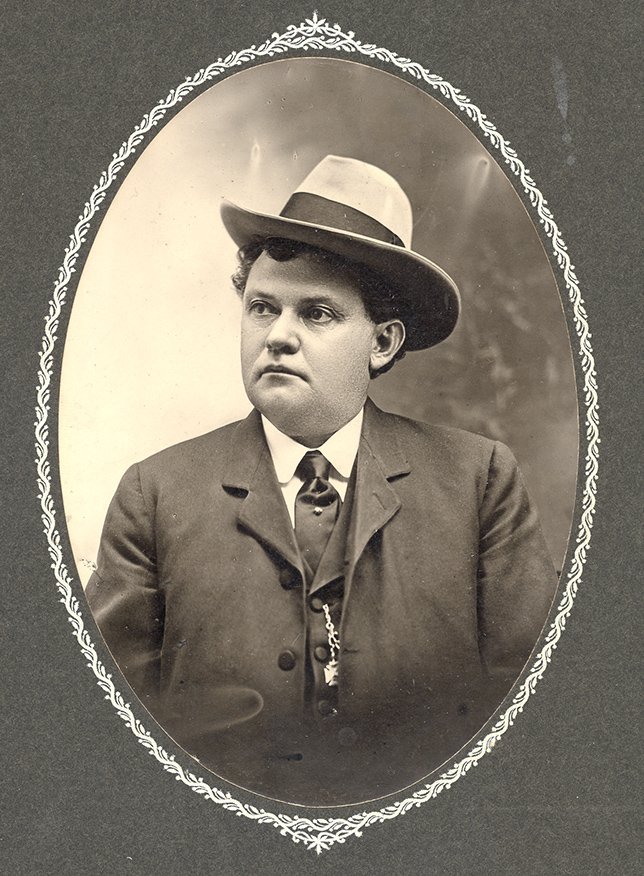
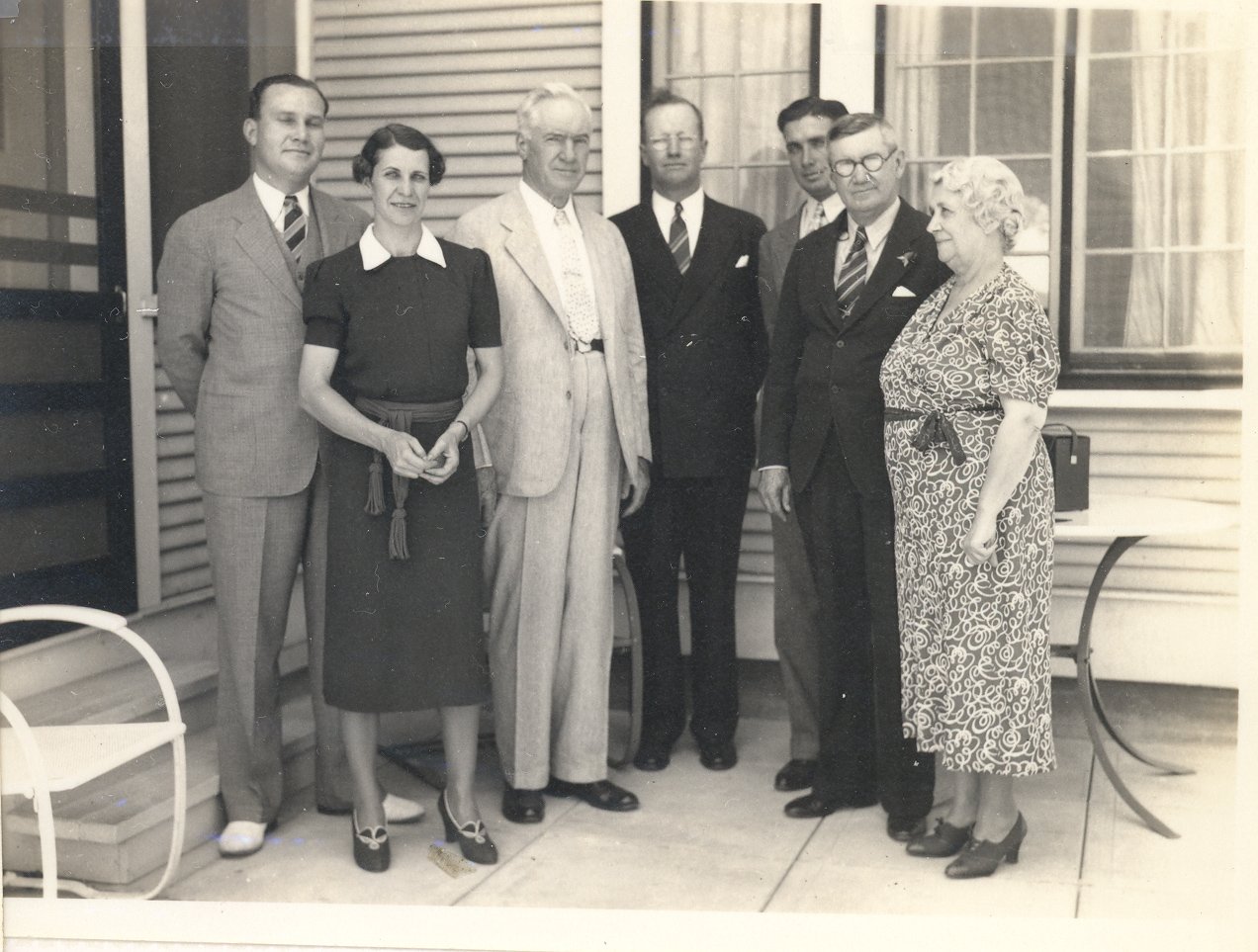
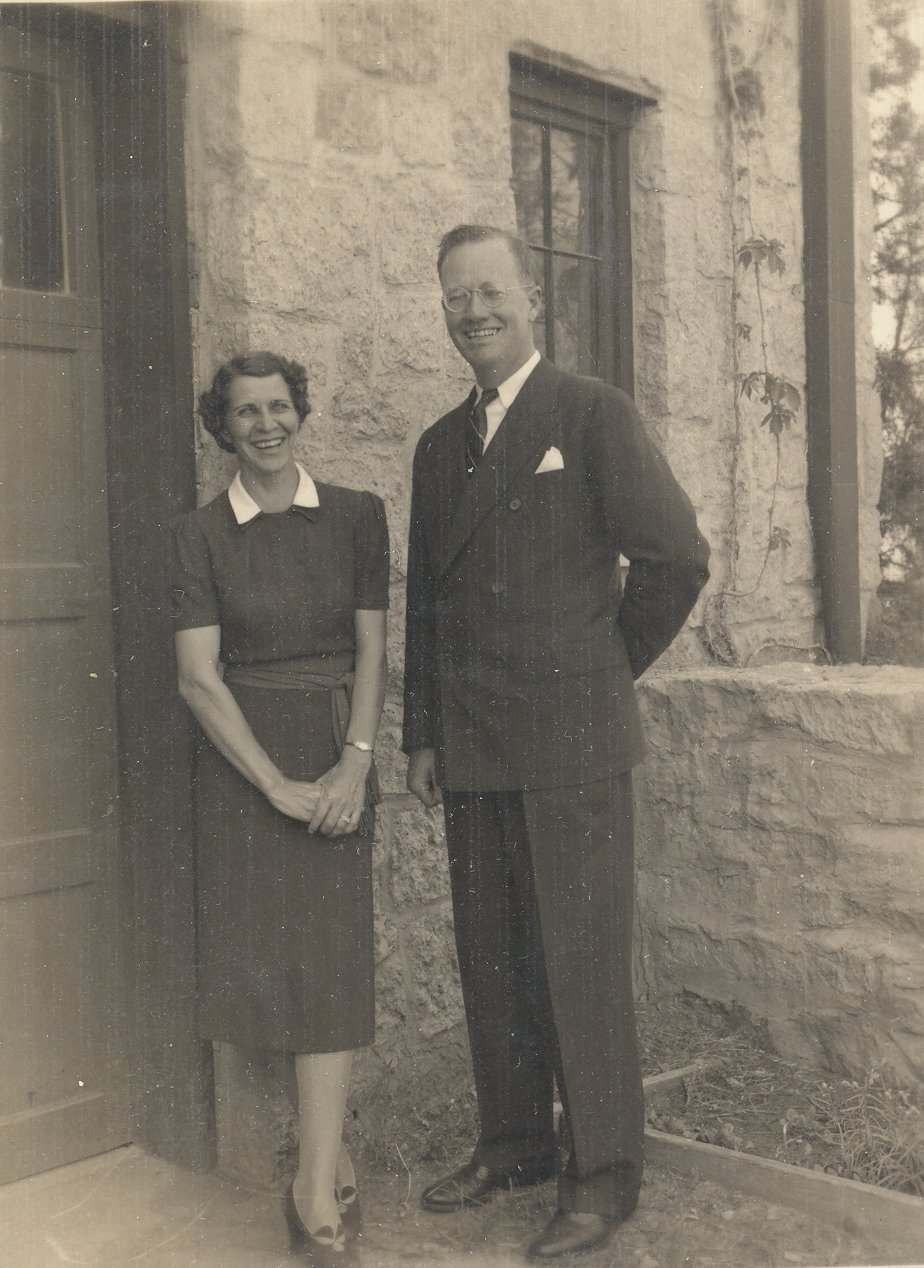
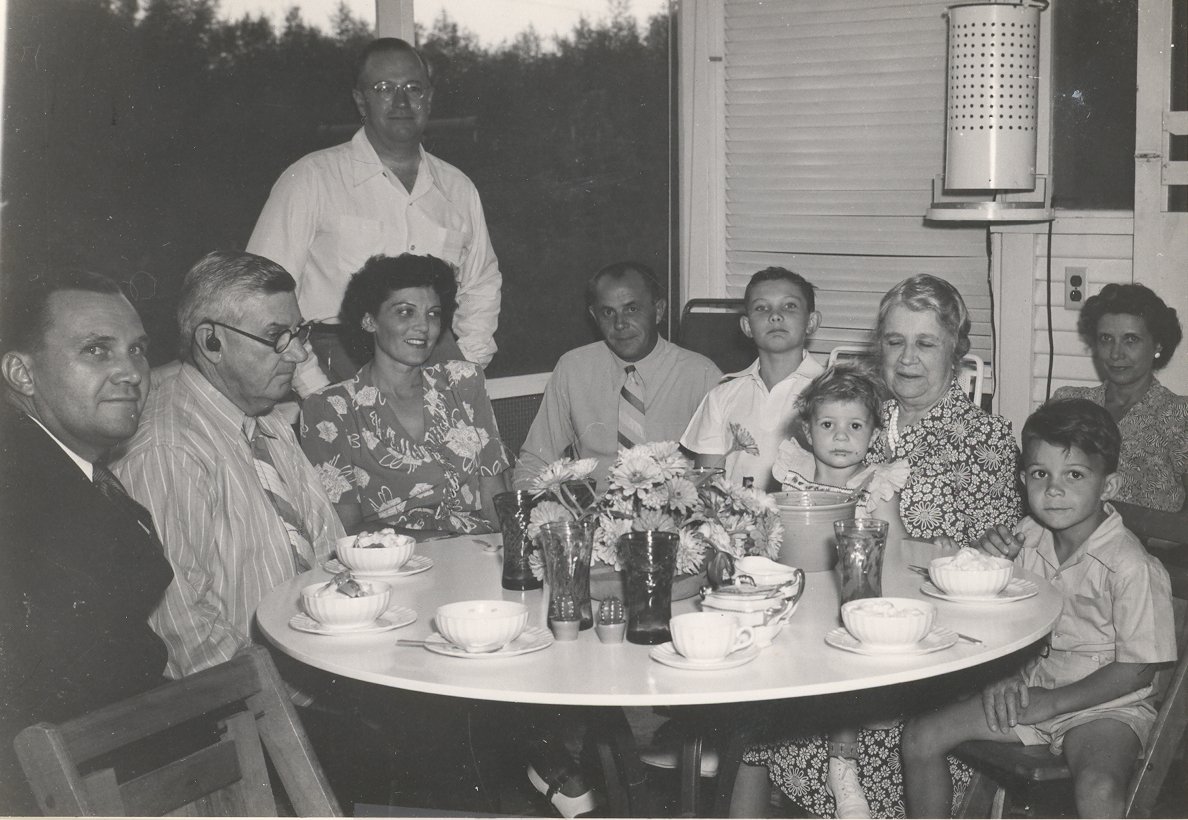
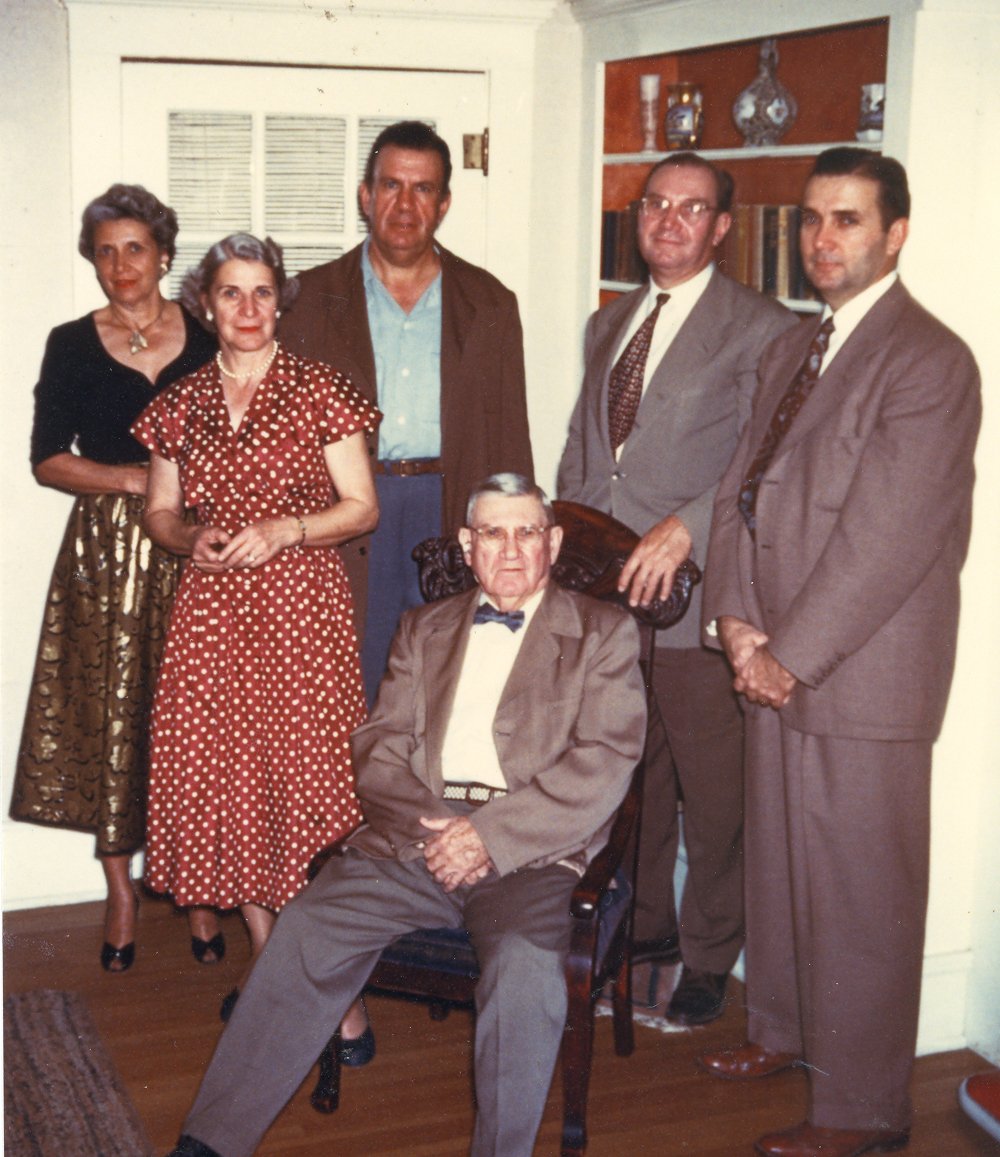
The Webb Family first came to Shackelford County in 1883, with Sam Webb (1855-1927) arriving in Albany just two years after the railroad had connected a terminus in the small, growing town. He purchased a large ranch six miles east of Albany where he lived with his wife and seven children. Partnering with his father, General William Graham Webb, he set up a Real Estate and Insurance business called Webb and Webb. After his father’s death, Sam went into business with Louis Hamilton Hill to become Webb and Hill.
Over the years, the business was involved in real estate, insurance, and to a lesser extent, cattle sales. For a short period time in the early years a man named Campbell also joined the enterprise and as lawyers he and Webb offered legal services. Over the course of the next three decades, the business name changed as partners came and went, but Sam Webb remained a mainstay until he retired in his later years.
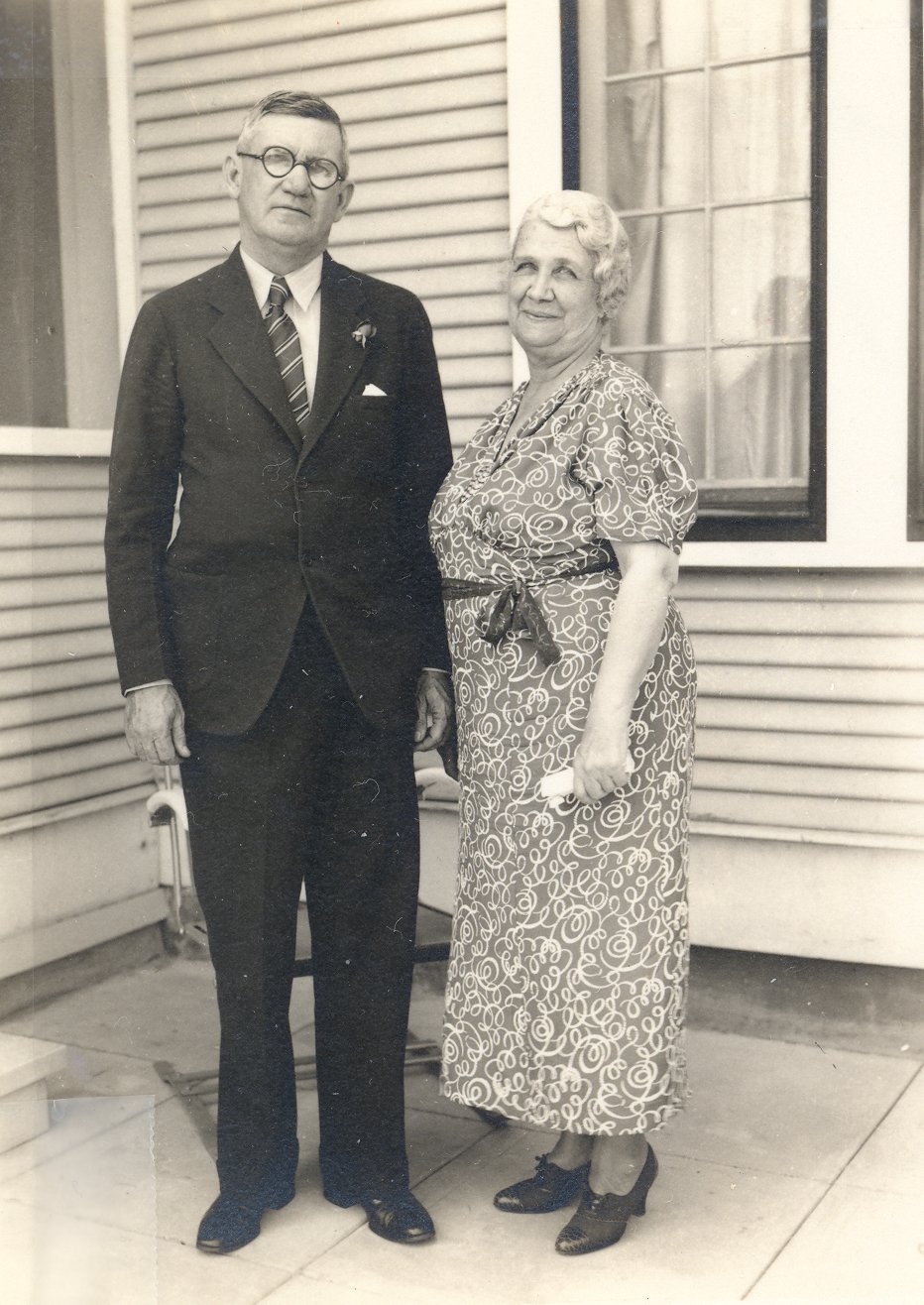
Within a few years of his retirement Sam’s son, William Graham Webb Sr. (1879-1961), in partnership with his own two sons William Graham Webb Jr. (1901-1977) and Sam Richard Webb (1913-2008) founded a new real estate and insurance firm in 1932. The business’ name once again returned to Webb and Webb.
Beyond their business enterprises, the Webb Family were deeply committed to and active in their local community. W.G. Webb Sr. was instrumental in the creation of the Fort Griffin State Park, and it was also through this persistent efforts what the Ledbetter Picket House was moved to Albany and kept intact as an example of frontier living.
William Graham Webb Jr. worked on a volunteer basis as a reporter covering local Albany events for the Albany News, the Abilene Reporter-News, and even the Fort Worth Star-Telegram.
Sam Richard Webb worked tirelessly for the Fort Griffin Fandangle, the Albany Chamber of Commerce, the local American Legion, the Albany Dance Club and the Albany High School Ex-Students Association. Sam continued to helm the Webb and Webb insurance agency until his retirement in 1990.
Their oldest sister, Virginia May Webb (1902-1983), married Albany transplant and oilman Graham Peterson Crutchfield. They were both active in the Fort Griffin Fandangle, with G.P. playing a vital producer role while Virginia was a regular cast member. Both had a love for outdoors activity and hunting, and enjoyed the opportunities for both that Shackelford County provided.
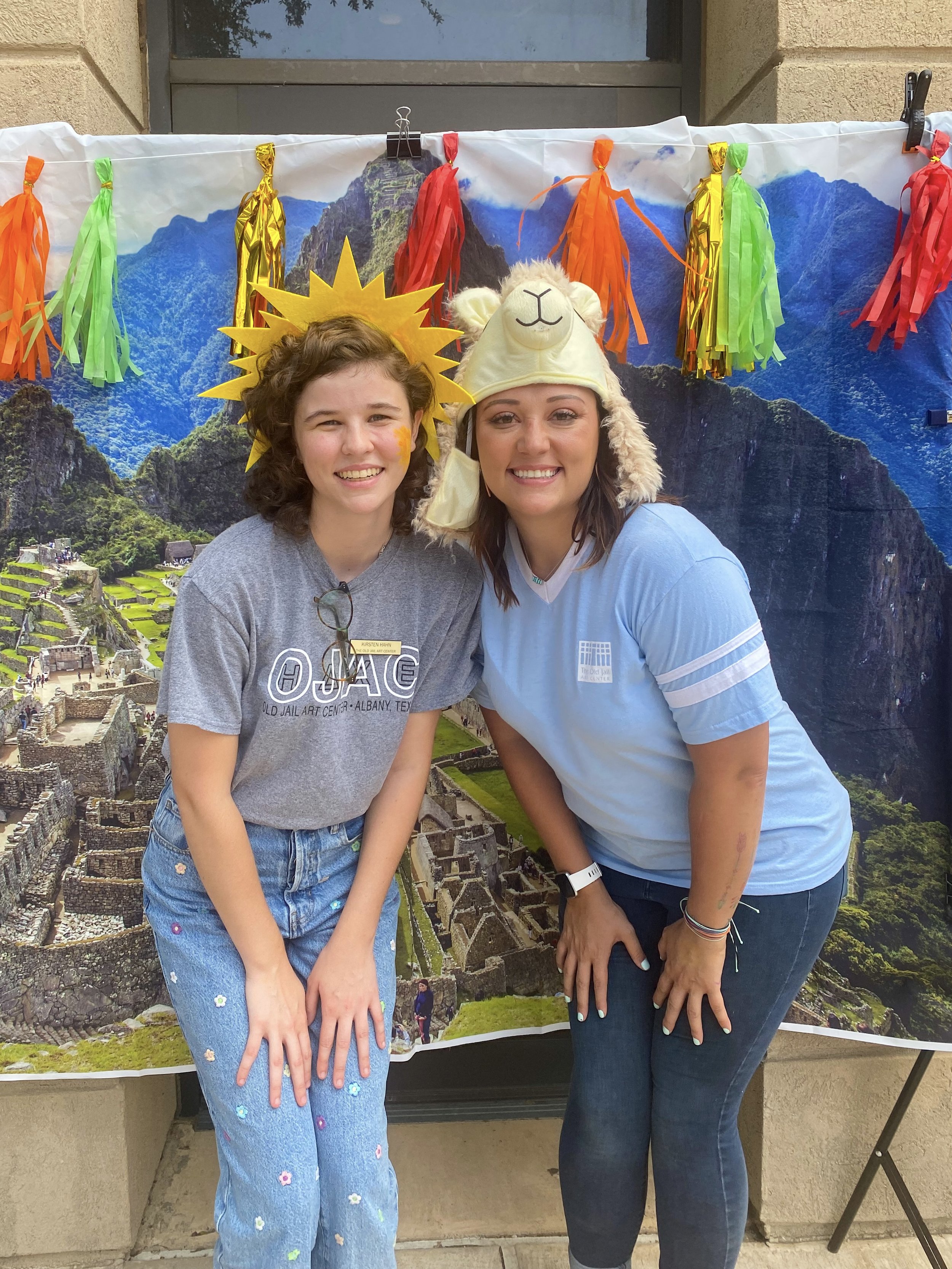
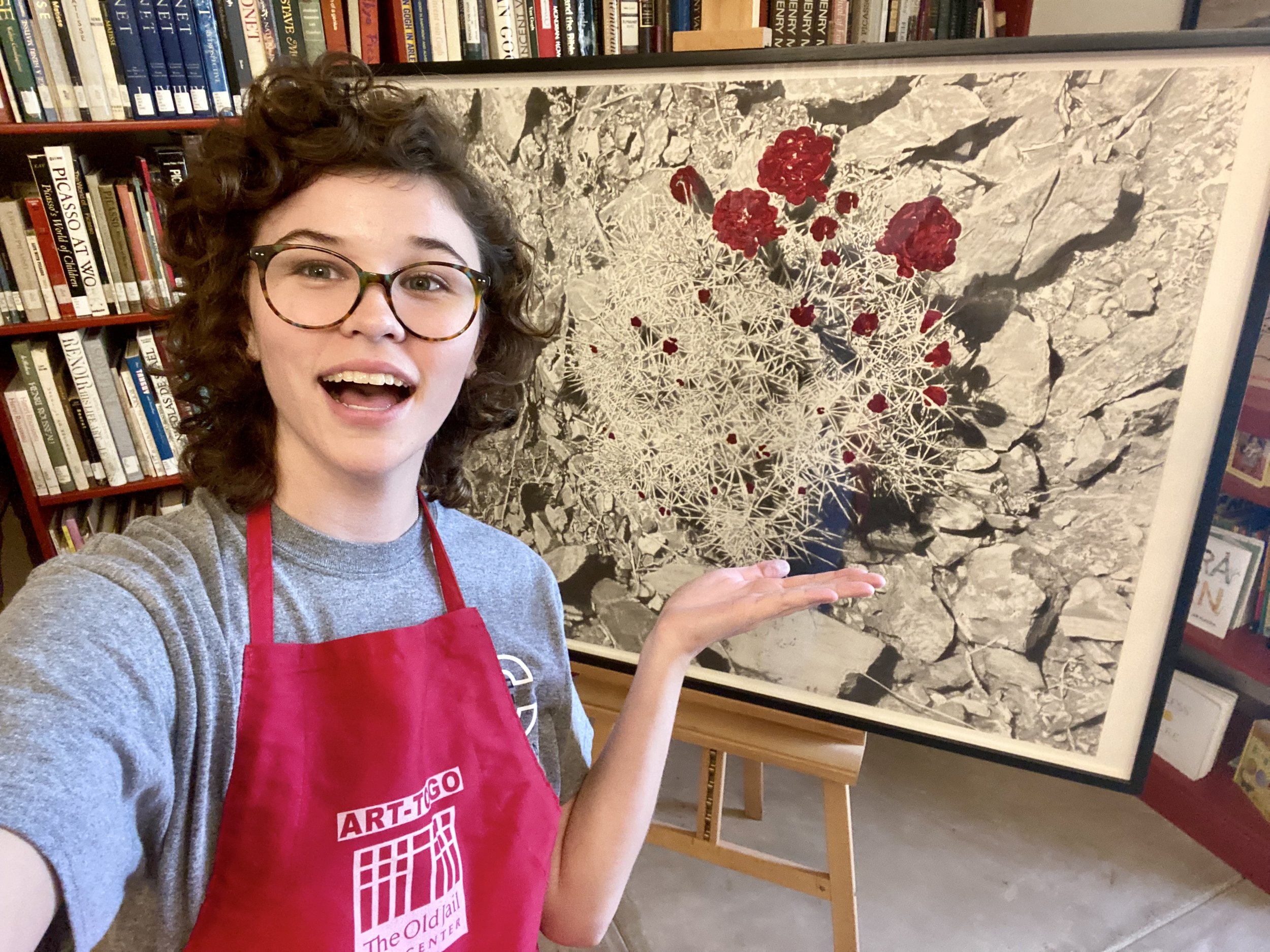
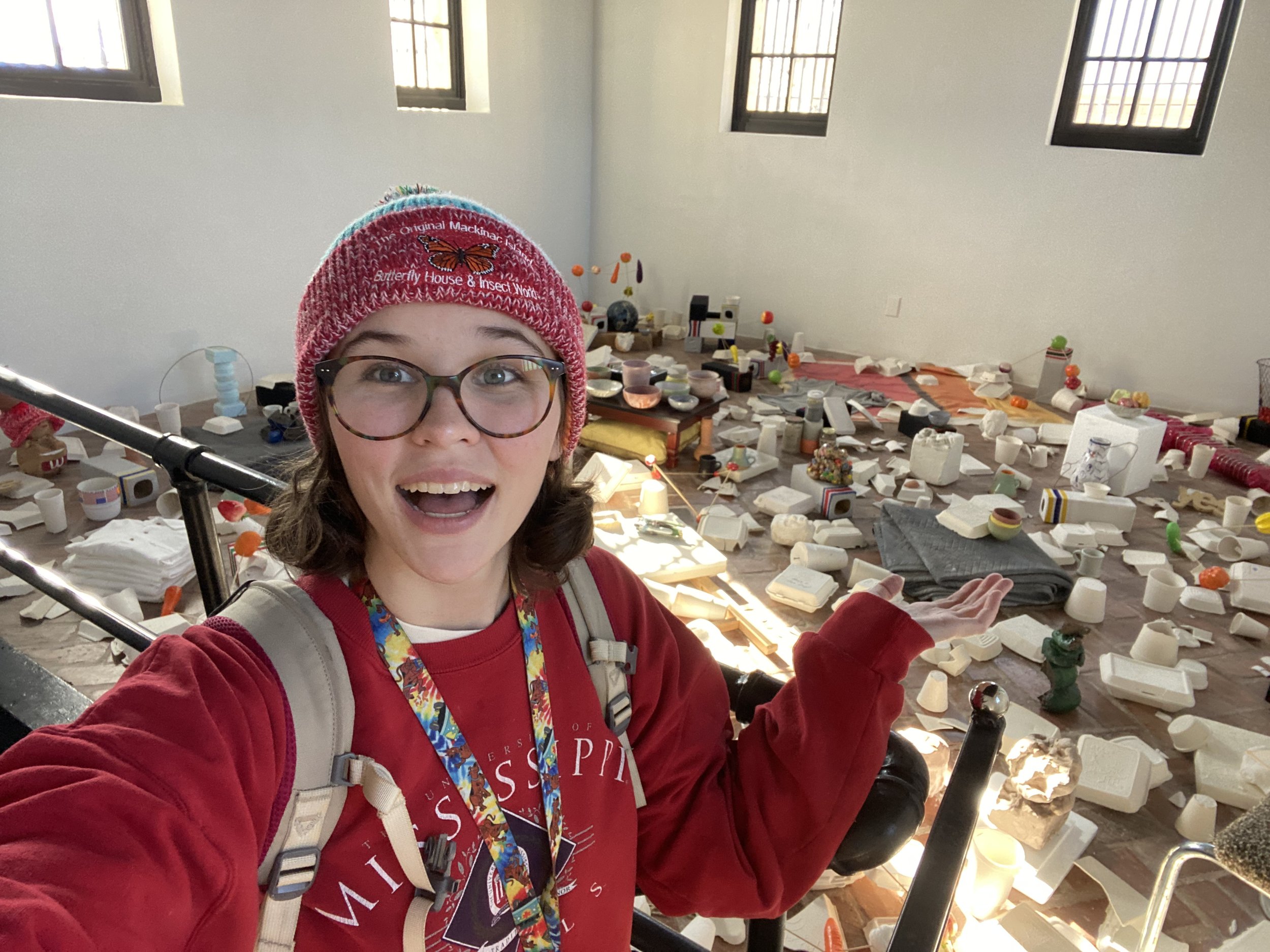
Sadly, my time has come to an end here at the Old Jail Art Center. I still remember the first time stepping into the building and being given an impromptu tour. There were so many exhibitions of all different types, and I was enamored with the huge photography exhibit on display. I was so impressed with the space and walked out knowing I wanted to work here.
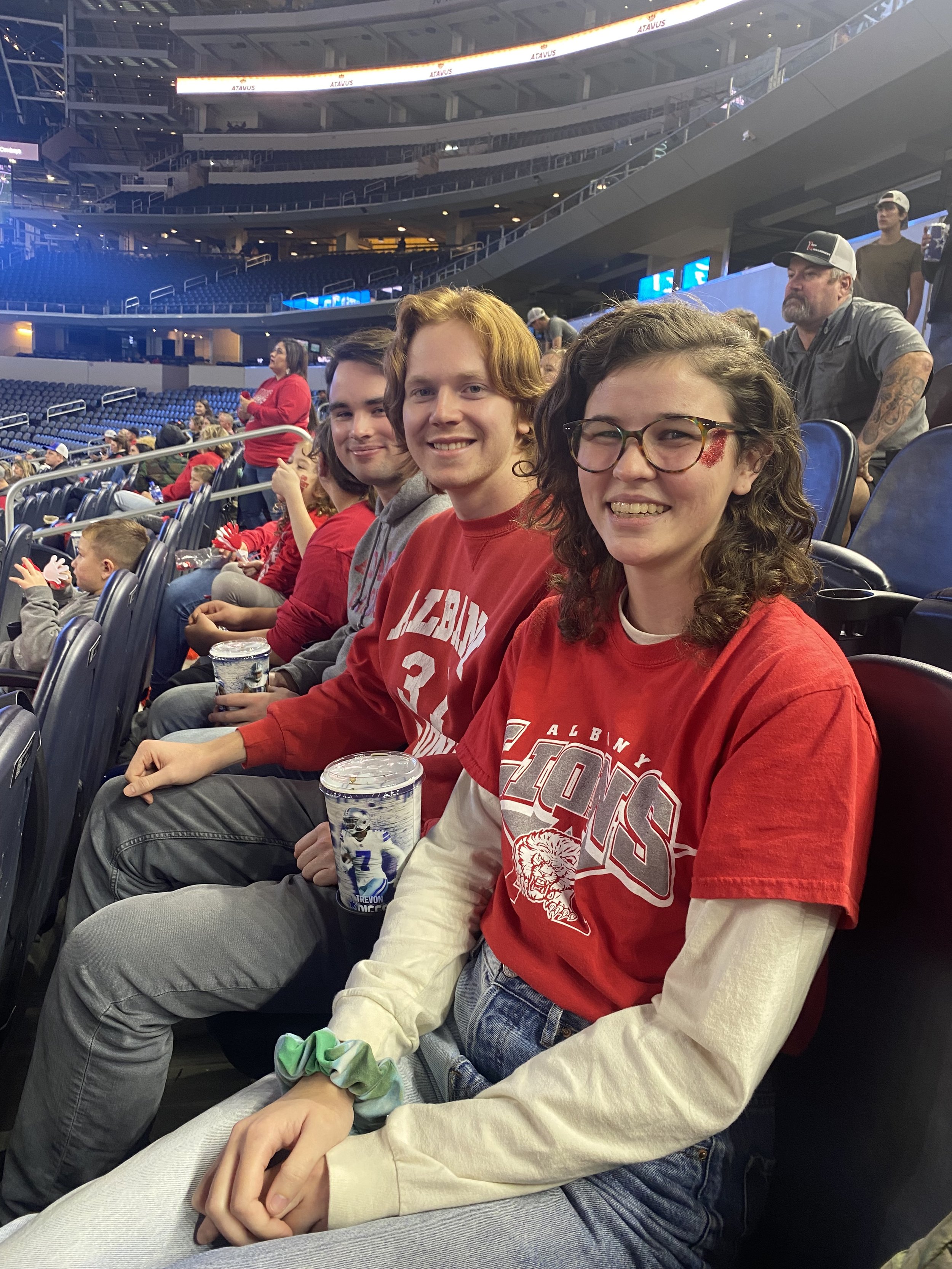
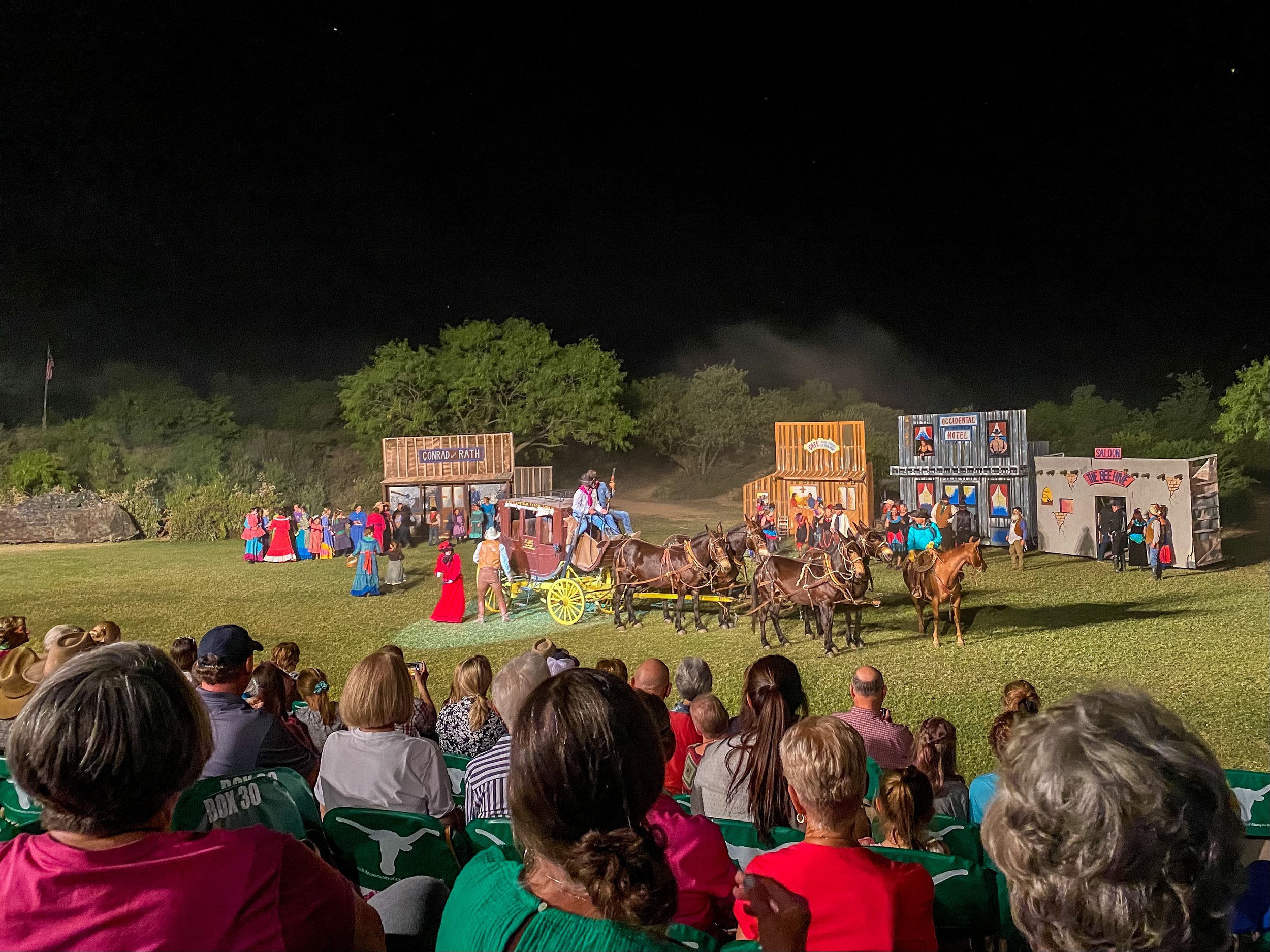
Being a big-town girl, moving to this area was quite the transition, but I loved getting to know the community and all of its characters! From going to my first ever Fandangle, then being invited to Betsy Senter’s iconic dinners, to seeing Albany High School win state at the Cowboy Stadium, I couldn’t get enough of the small-town charm. I am truly going to miss hearing that courthouse bell ring every 30 minutes!
I want to give a huge thank you and put a spotlight on the staff of the Jail. You really could not ask for better coworkers. I have loved getting to know everyone on the staff and having compelling conservations on topics from movies, to cats, to BTS. Thank y’all for taking a chance on me and giving me one of the best jobs I know I will ever have.
This institution has touched my life in so many ways. I am so proud to have worked here and been exposed to the amazing collection the OJAC has to offer. No matter where I go I will always hold Albany and the Old Jail Art Center close to my heart.
… And when I become a member I’ll be seeing all of you at the exhibition openings, but this time as a guest!
Signing Off,
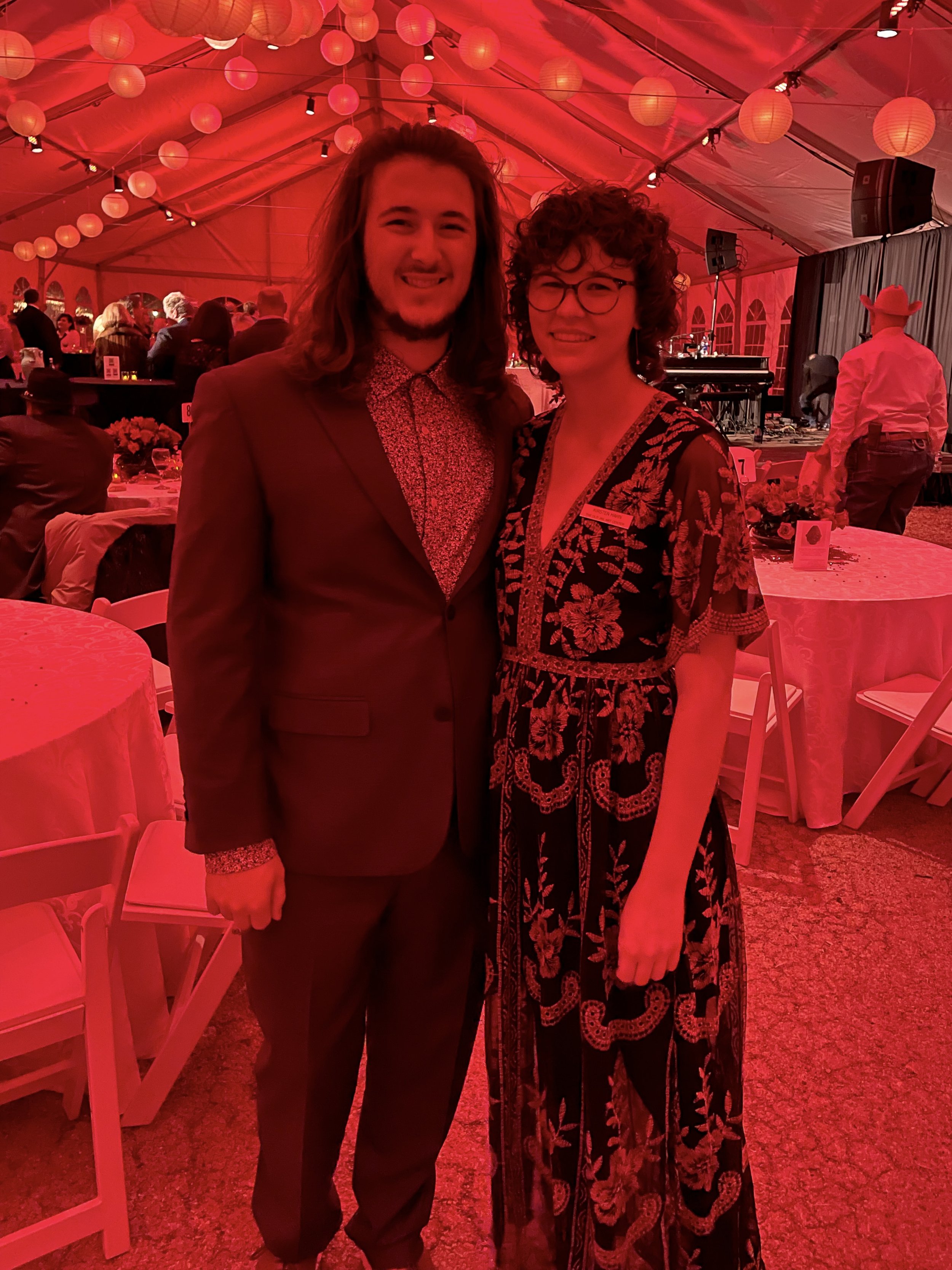
Kirsten Hahn
Family and Public Programs Coordinator
READ MORE FROM OJAC STAFF
In recent gifts to the collection, the OJAC has been quite fortunate to receive two unique “cloud” works by Austin-based artist Brad Tucker. The first, titled Exposed Midriff, is a gift from Jaime and C. Sean Horton. The work is constructed of chocolate brown fabric stretched over an exposed cloud-shaped plywood frame. The second is a work on paper that includes a cluster of overlapping cloud rings on a cyan blue background. This work, titled Clouds, was received from The Carter/Wynne Family Collection, and also exhibited in the OJAC’s Paper Chase exhibition last summer.
I’ve always been a fan of Brad Tucker’s cloud works and was curious to learn about the origin of this recurring motif, so I asked the artist to share his thoughts. Tucker says he began making the cloud-shaped works shortly after he graduated from UNT in 1991. At the time, working at a sign shop in Irving, Texas, his job was bending strips of metal and tin into channel letters that would house neon lit, Plexiglas faces. To make curves, thin metal strips were wrapped around steel pipes; to make angles, he used a sheet-metal break. It was tedious work, but Tucker says there actually was a connection between the work he was doing at the sign shop and the shaped-canvas, object paintings he’d been making at UNT. One day, Tucker took an odd strip and repeated the pattern: curve-angle-curve-angle, and so on. When he joined the ends of the strip, the result was a cloud-shaped aluminum loop.
Happy with the results, Tucker then began transferring that shape to similarly formed painting supports. “Even though I employed self-determined rules for drawing the clouds (the humps all had to have the same paint can radius), they always came out looking like they didn’t take themselves too seriously.” Tucker says initially he was put off by descriptors such as “cartoon-like,” but has come to appreciate the term; and recognizes that the combination of sophistication and goofiness are what gives the work lasting appeal.
Over his career, the artist continues to return to the cloud motif to explore new facets of the form. He enjoys the fact that their rounded edges lend themselves to nontraditional hangings. The shapes foster unexpected modes of presentation as individual clouds give way to cluster groupings which then lead to new narratives.
Exposed Midriff, 2000. BRAD TUCKER. Fabric, latex paint, plywood. 21 x 23 x 1 in. Gift of Jaime and C. Sean Horton. 2022.007
Clouds, 2020. BRAD TUCKER. Graphite, watercolor, and cyanotype on paper. 16 x 13 x 1 in. Gift of the Carter/Wynne Family. 2022.010
Amy Kelly
Registrar
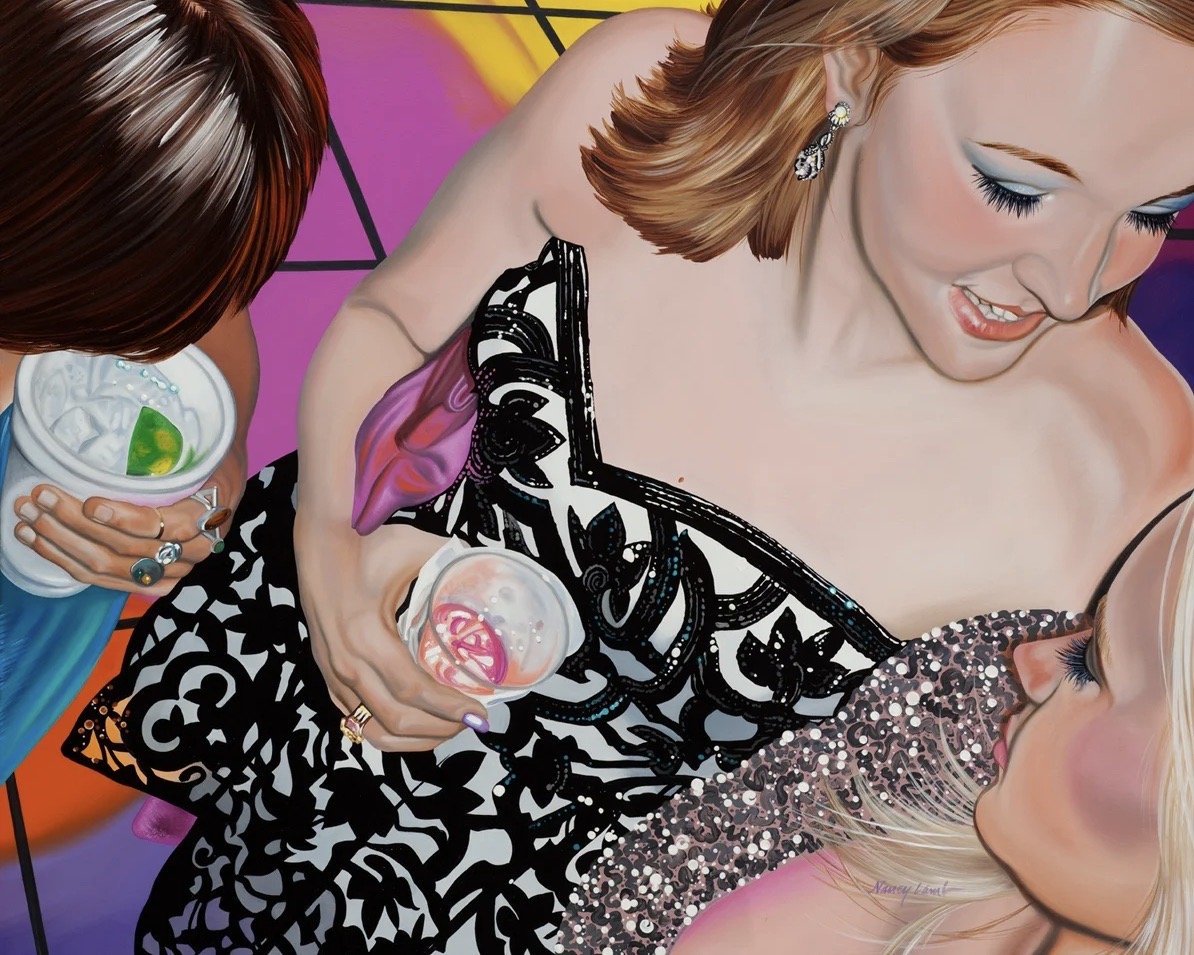
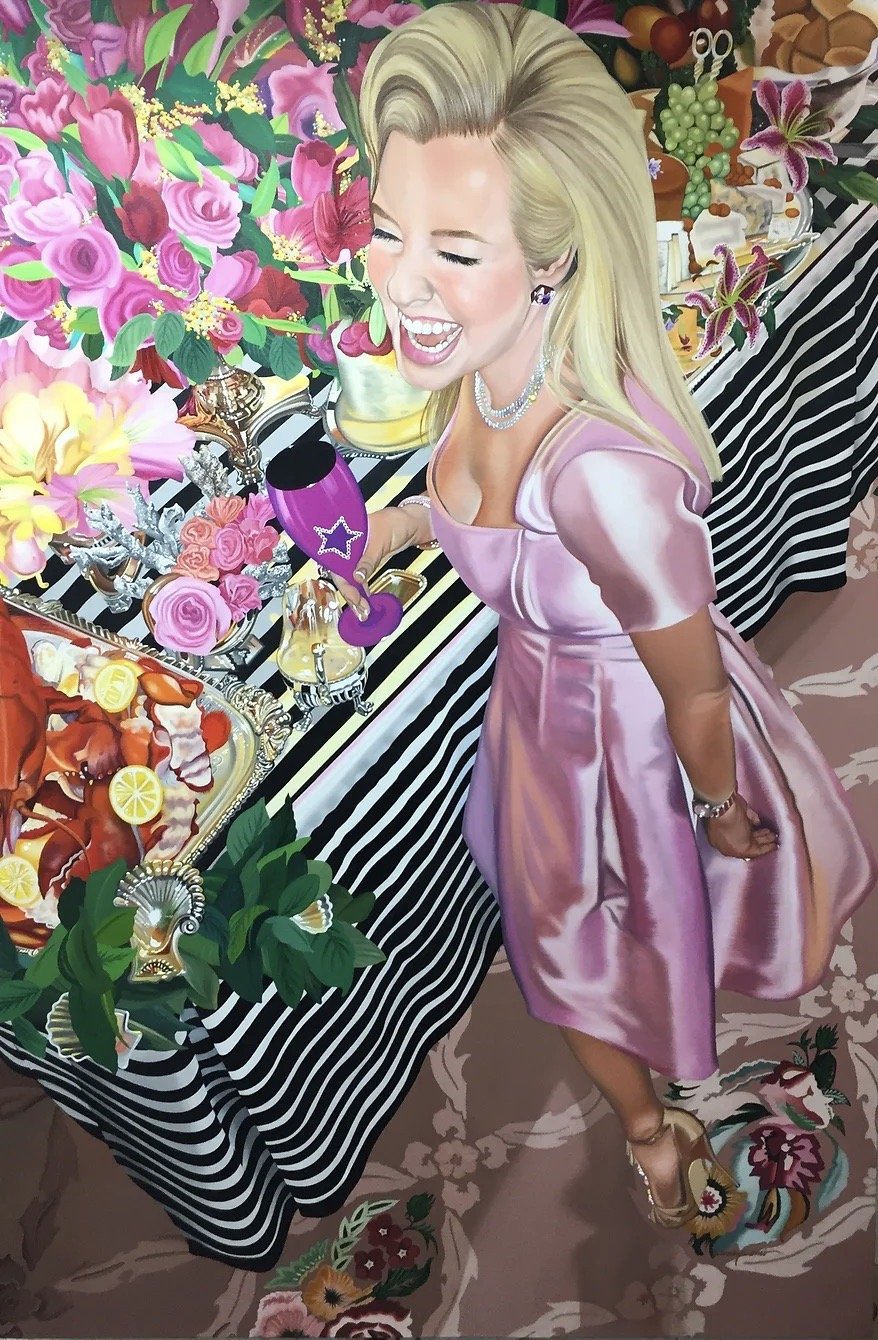
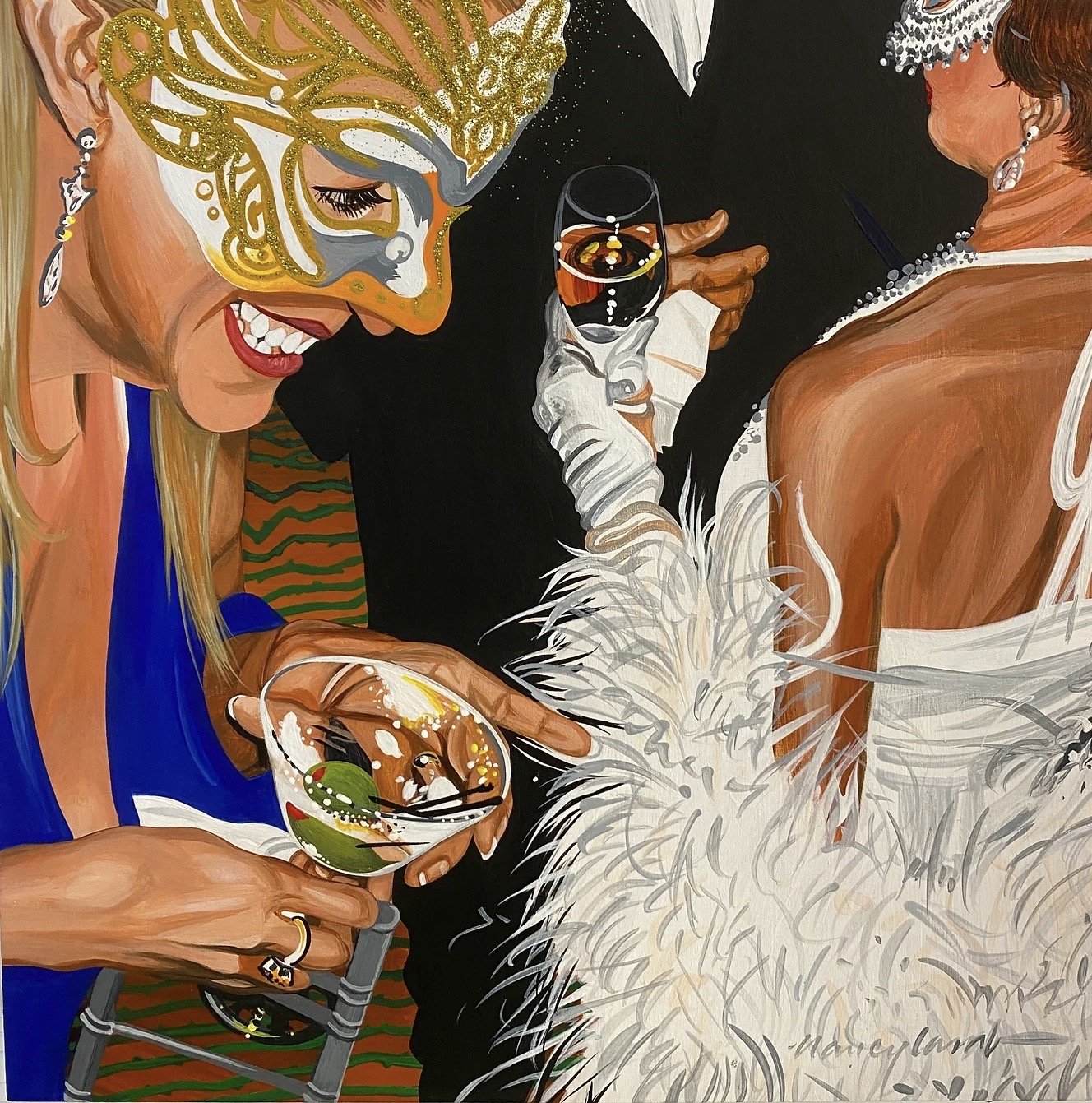
One of my favorite contemporary works from our permanent collection is a painting by Ft. Worth Artist Nancy Lamb. Are you familiar with her work? If not, I think you’re about to fall in love, but first, let me introduce you to the artist.
Nancy Lamb was born in 1956 and formally trained at Texas Christian University and the Fort Worth Museum of Science and History, where she taught ceramics from 1970 to 2004. Her main styles of work include drawing, oil painting, and watercolors.
Almost all of Nancy's work is extremely human-centric. These oddball portraits reflect parties, poker tables, pools, and laundry rooms! The pops of color are always noticeable and also an interesting frame of reference or cropping. I think this quote by Jeffery Jackson sums up her work perfectly, “Most notable are her recent oil paintings, which depict every aspect of social interaction, telling snapshot tales of interpersonal intrigue which entice the viewer to partake in the events so vividly portrayed—who are these people? What do they mean to each other? What do they tell us about the human condition? Her characters, though nameless, haunt one after first acquaintance; they are our friends, our neighbors, our families, ourselves, thrust under the microscope in a way which rather brings to mind what Martians might see when they look at us. As Ezra Pound once challenged writers to "make it new", never perhaps has a modern artist done so for that most ordinary of subjects—man.”
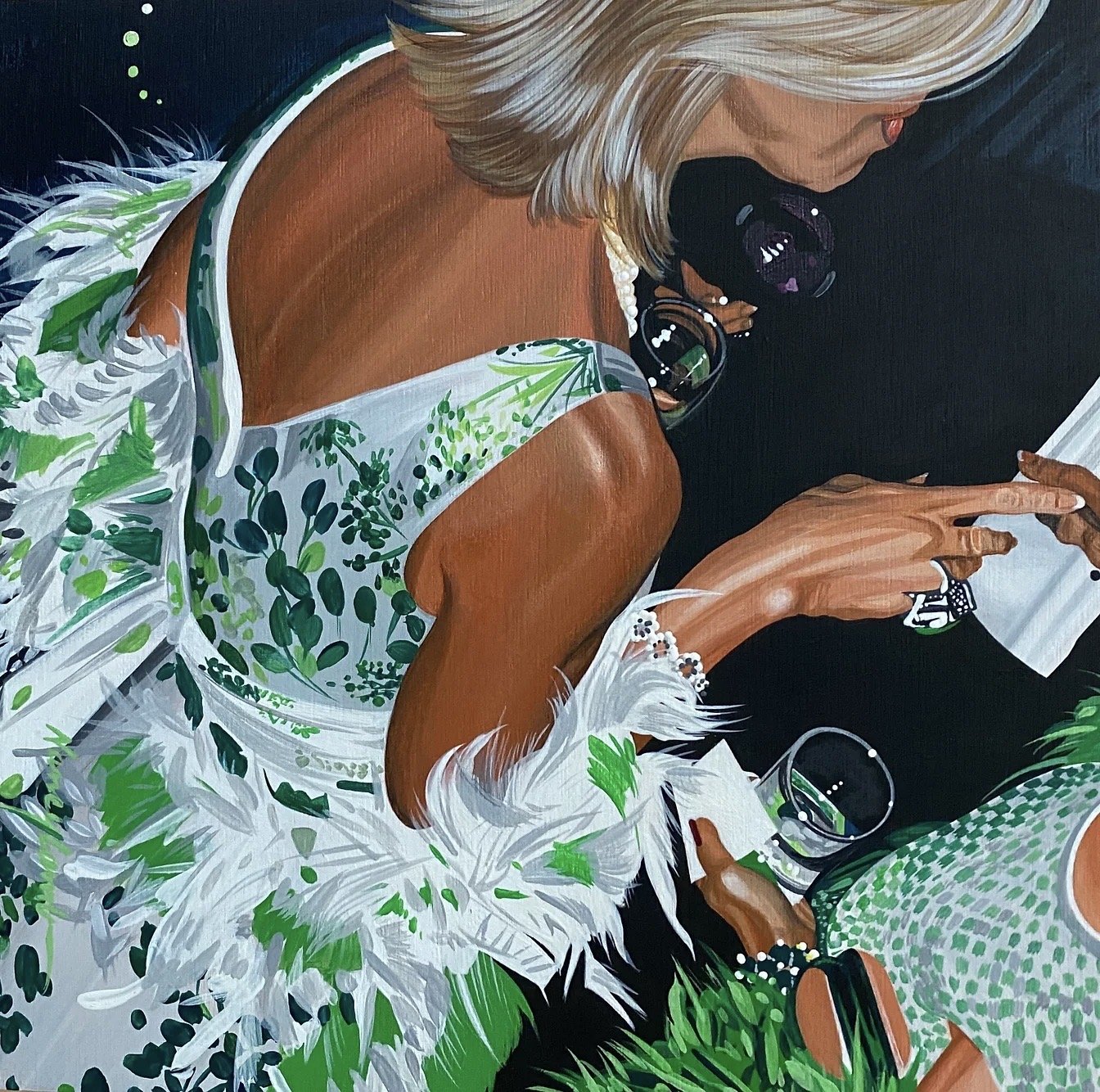
Back in 2010, Nancy’s work was exhibited in the OJAC Cell Series- which showcases Texas or Texas-connected contemporary artists. Her show was entitled “The Business of Pleasure.” She was actually one of the first artists who got to work upstairs freely in the jail as 5th installment in the series and that exhibit still stands as a museum staff favorite to this day. Judson Petty, nephew of our founder Reilly Nail wrote of the exhibit: “.. Lamb gives homage to the people who make the merriment happen. These are the waiters, the bartenders, the musicians and other performers who strive to secure the satiation of such"bacchanalian bon vivants." Enter this exhibit with joyous anticipation, and plan to leave enlivened and grateful. In these new watercolors and earlier oils, the textures taunt you, the colors caress you, and you will only want more. And later, if you wish, write a quick thank-you note to Nancy Lamb, for she is the host who has served you with delight.”
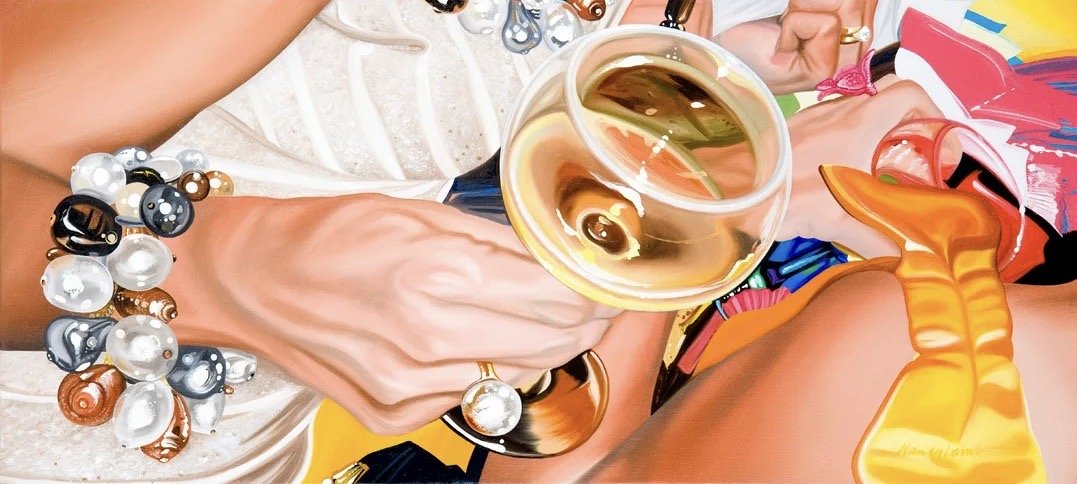
Let me introduce you to a work from that show- that is now a part of the museum’s permanent collection: Slurpy, Syrupy, Strawberry Swirler! What immediately drew me to this watercolor are the vibrant pops of color. Like most of her work, this one is as colorful and engaging as the artist. Lamb is a big and bright personality who doesn’t seem afraid to put big color on a canvas. Also, the unusual framing of the piece just draws you in, right? The perspective is so engaging. I love how you can examine the body language of our subjects, but not see their face. It almost feels as if I am at a corporate dinner or Holiday party.
It’s also an interesting interaction between “business man” and waiter which Lamb explored in this show, she wrote “I have been contemplating this dynamic for about ten years. There is a whole other group of people that attend the same occasions inside the same structures, but with a completely different purpose and attitude, yet they are essential to the success of the celebration. What attracts me to the people in the background are their uniforms, their helpfulness and hard work. They need their time in the limelight as well! Isn't it the kitchen or bar that holds the most magnetic allure and comfortable fascination at a party?”
All of these concepts come together to create this beautiful piece of work that is multifaceted at every level of interpretation.
Kirsten Hahn
Family & Public Programs Coordinator